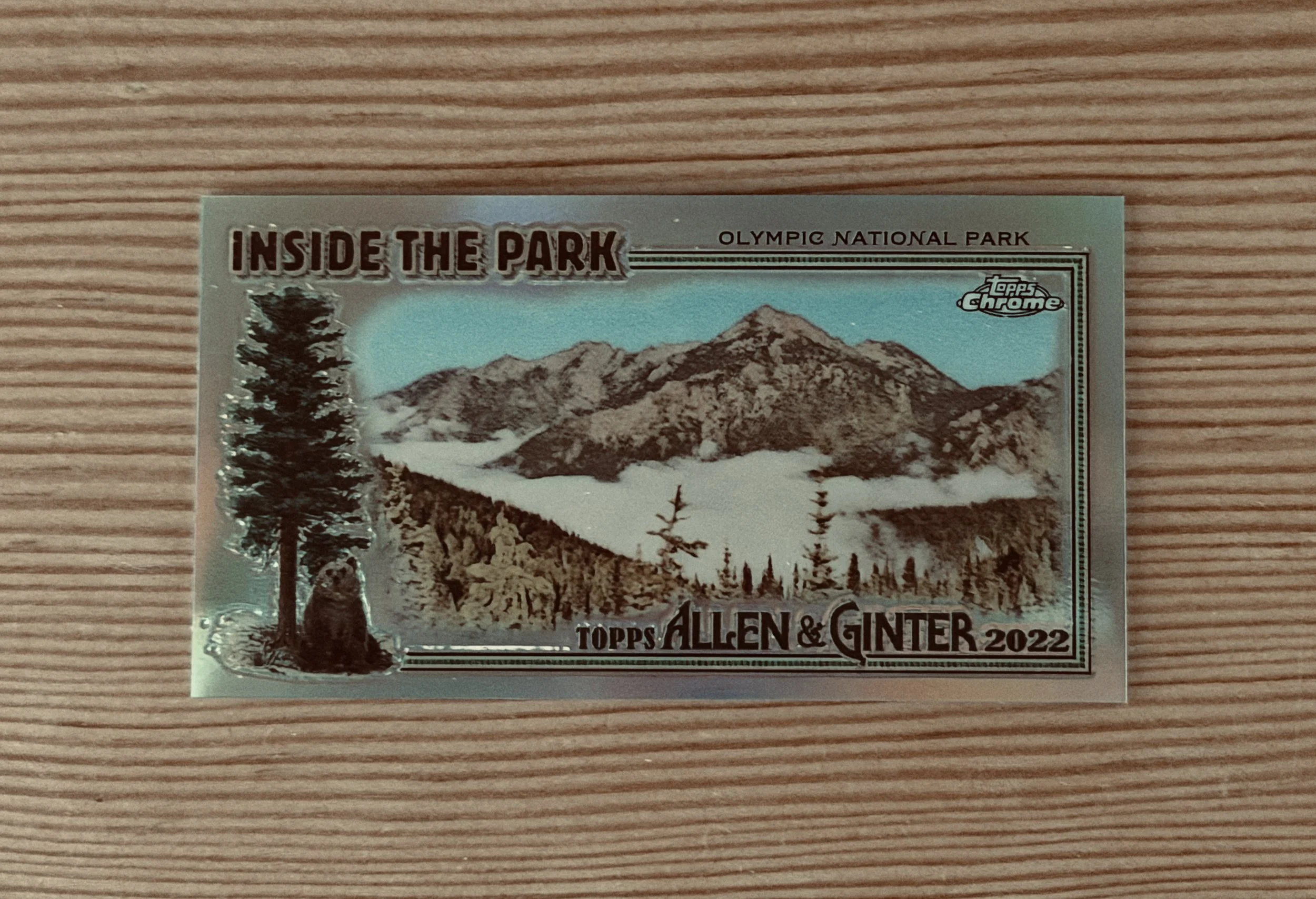
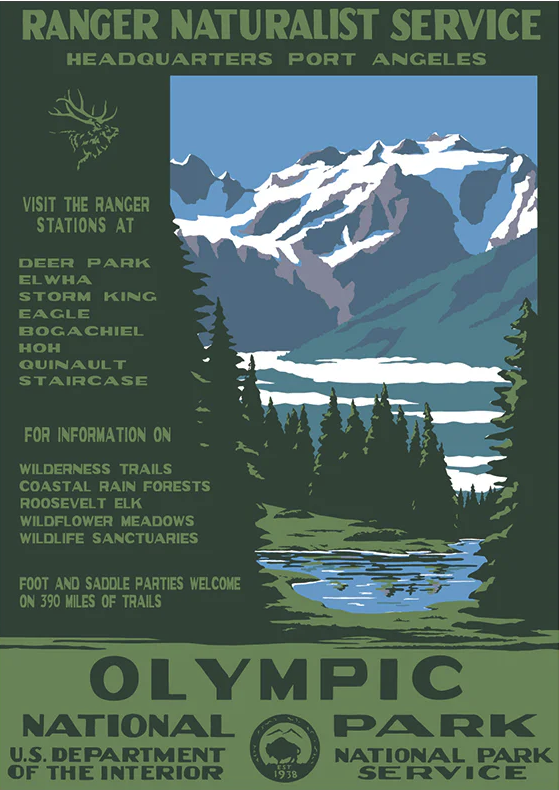
OLYMPIC NATIONAL PARK
Washington · Established 1938 · 922,650 acres
1. The nine tribes of the Olympic Peninsula — the Hoh, the Skokomish, the Squaxin Island, the Lower Elwha Klallam, the Jamestown S'Klallam, the Port Gamble S'Klallam, the Quinault, the Quileute, and the Makah — share complex histories of trade, religion, warfare, and kinship, as well as reverence for the teaching of elders.
2. The Quileute language has no demonstrable relationship to any other language on earth — not to Coast Salish, not to Chinook, not to any Pacific Northwest language family. Its complete uniqueness implies a very deep, independent history in this place. When a language has no relatives anywhere, it means the people speaking it have been in one place for a very long time.
3. According to the Quileute creation story, the transformer Dokibatt changed wolves into the first human beings — the direct ancestors of the Quileute people. The connection between the Quileute and the wolf is not metaphorical. The Quillayute River takes its name from their word for wolf. The river runs through the park. The wolves were here before the river had a name.
4. The Quileute people have continuously inhabited the mouth of the Quillayute River for at least 4,000 years. Their oral tradition places their presence there since the very beginning of the world itself. The Olympic Peninsula has been inhabited for at least 12,000 years. The park is 87 years old.
5. Along the wilderness coast between Cape Alava and Sand Point, Makah petroglyphs are carved into a cluster of boulders called Wedding Rocks. Orcas. Fishermen. Oval moon-like faces. The carvings predate European contact. They are believed to have marked village boundaries. They are still there. Someone ran their fingers along the smooth, shallow grooves that outlined an image of an orca and wondered if the creator also had been in awe of such a mighty ocean.
6. Around 1560, a mudslide buried a Makah village called Ozette under ten feet of wet clay. The mud preserved everything — six longhouses, 55,000 artifacts, baskets, cradles, clothing, sleeping mats, harpoon sheaths, a whale-fin carving inlaid with more than 700 sea otter teeth. Archaeologists called it the American Pompeii. The Makah had always known about the slide. Their oral history told of it for 400 years before any archaeologist arrived.
7. The Makah Tribal Council learned that hikers were walking away with artifacts from the Ozette site after a storm exposed them in 1970. Tribal chairman Ed Claplanhoo launched a boat and investigated. That evening the investigators returned with hats full of confiscated artifacts. The next morning Claplanhoo called a Washington State University archaeologist. For the next eleven years, Makah community members and graduate students excavated together. The artifacts stayed on the reservation. The Makah Cultural and Research Center opened in Neah Bay in 1979.
8. Streams and landmarks deep in the Olympics have Quileute names. The historian who wrote that the coastal tribes never ventured inland, and that a man who went into the forest was called "the Fool" — that historian was wrong. The names prove it. You cannot name what you have never seen.
9. The Klallam people consider the Olympic Mountains sacred. A Klallam woman named in no document any settler wrote hiked from the Elwha River valley over the mountains to the Quinault River every summer to visit relatives, bringing her five children. This happened every year for decades. No expedition sponsored it. No newspaper covered it. It was just a mother and her children crossing the mountains that some people thought no one ever crossed.
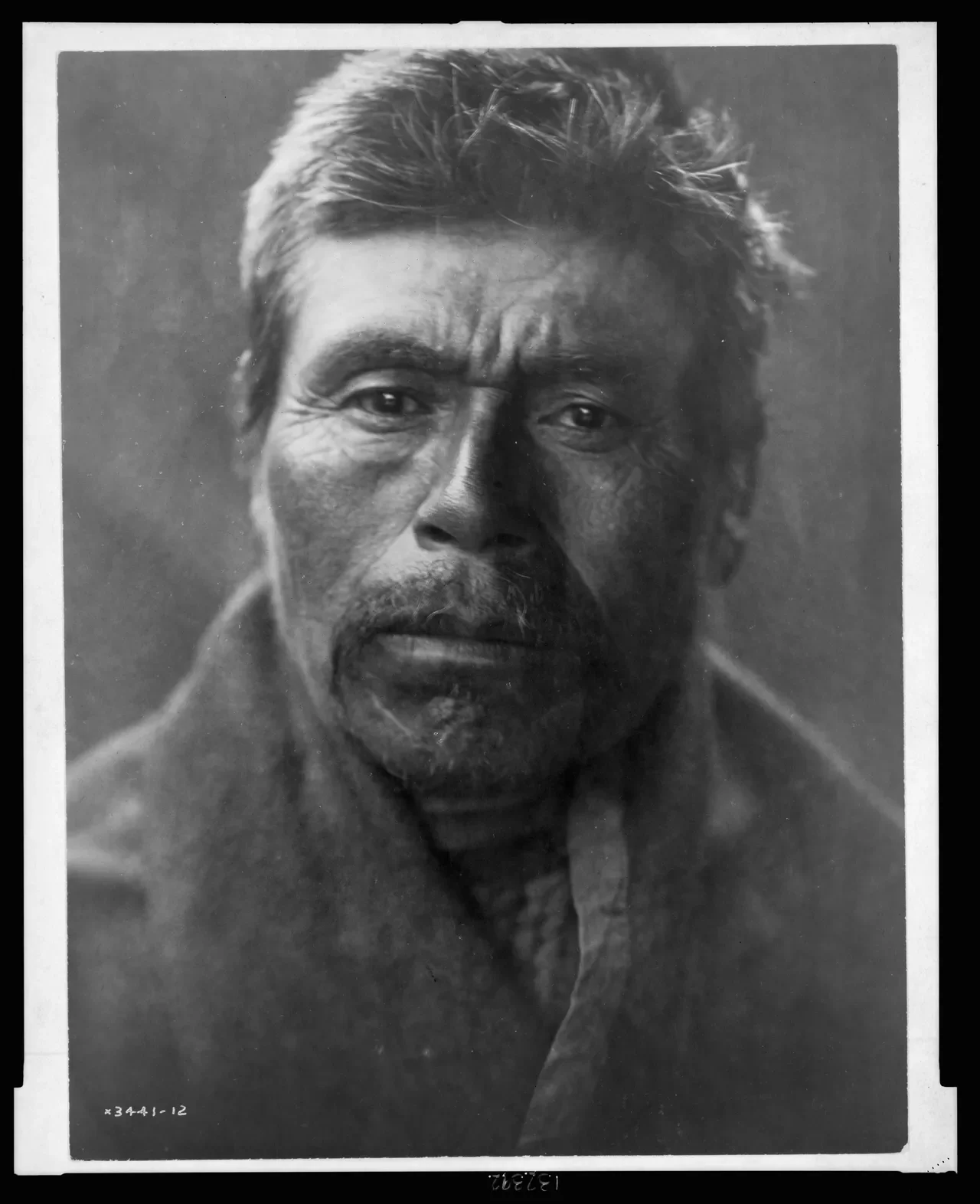
10. The land, the water, the sky — those are all interconnected. They all are a part of my ancestry, and they're the reason why I'm here today.
11. The Hoh River is born on the flanks of Mount Olympus and runs 56 miles to the Pacific. Glacial water, milky blue-gray, fed by snowfields and rain, cold enough to make your feet ache through wading boots in winter.
12. The Pacific Northwest is simply this: wherever the salmon can get to. Rivers without salmon have lost the life source of the area.
13. The moisture is predatory in this part of the world, and no element, be it stone or wood or tin or steel, lasts very long without losing some part of its composition to the nag of precipitation.
14. Naturalist Roger Tory Peterson has calculated that the Olympic Rain Forest is weighted down with more living matter than any other place on earth.
15. The oh river down in the olympic forest is a place that has always connected with me since I first went years ago. My grandpa and I have made countless memories going up to fish and I vividly picture the smell, sound and feeling.
16. This is our homeland, and so it's within my blood, it's within my culture and in my history to have music be a part of who I am.
17. Time has a different quality in a forest, a different kind of flow. Time moves in circles, and events are linked, even if it's not obvious that they are linked. Events in a forest occur with precision in the flow of tree time, like the motions of an endless dance.
18. The regional icons — salmon and trees and mountains and water — spring from the elements. If people here become too far removed from those basic sources of life, then they lose the bond to a better world.
19. Silence is not the absence of something but the presence of everything. It lives here, profoundly, at One Square Inch in the Hoh Rain Forest. It is the presence of time, undisturbed. It can be felt within the chest.
20. In our family, there was no clear line between religion and fly fishing.
21. Gordon Hempton placed a small red stone 3.2 miles up the Hoh River Trail in 2005. The stone was given to him by David Four Lines, the late cultural elder of the Quileute Tribe.
22. My spiritual life is found inside the heart of the wild.
23. The vibrant sound of the river flowing is a peaceful sound that gives me hope and nostalgia whenever I hear it.
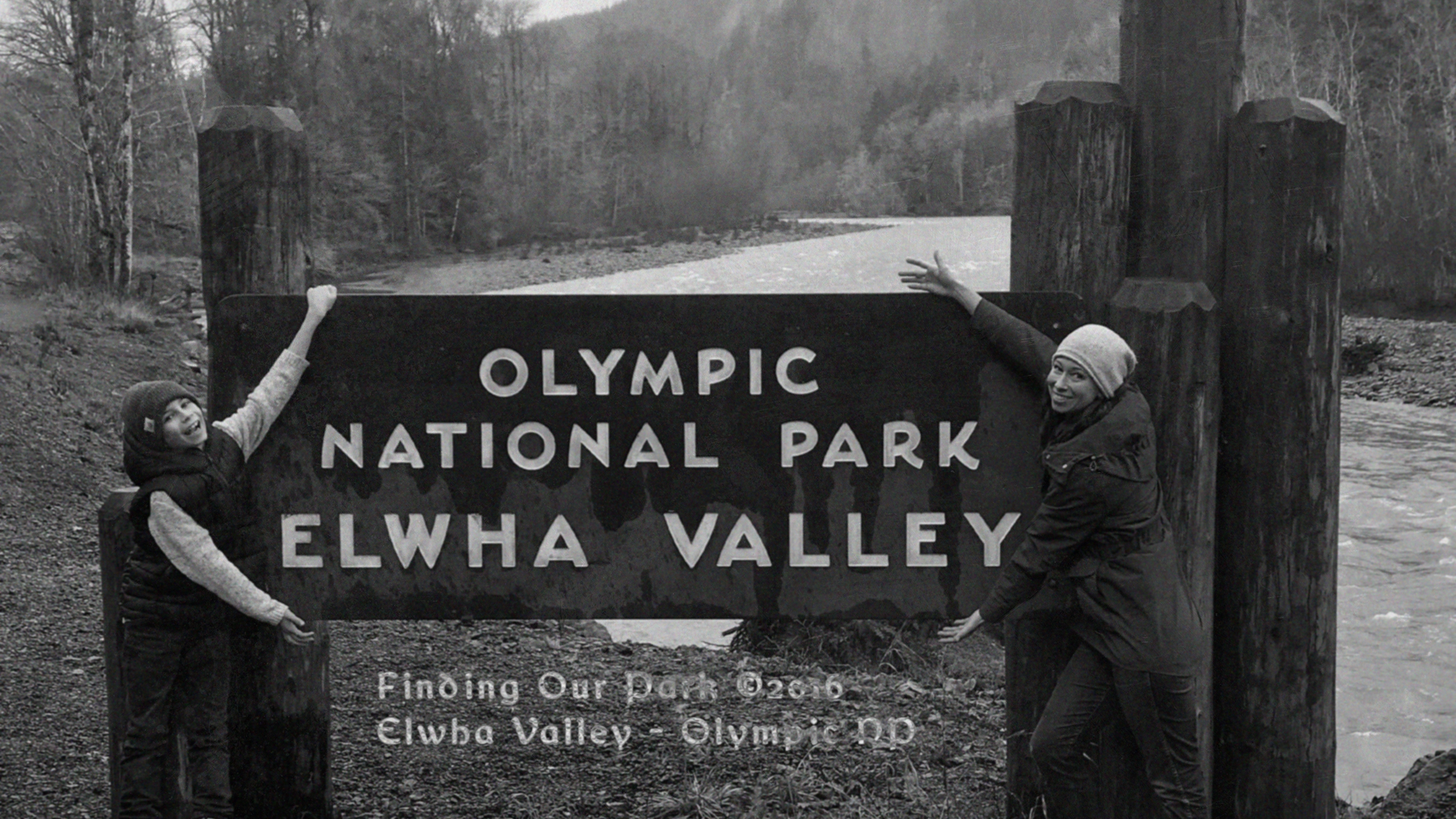
24. We fish the Hoh for steelhead, my dad and Jude and I, in the plunking style — heavy weight on the bottom, bait drifting in the current, nobody moving much. My dad complains about the fly fishermen from Montana who've discovered the river. He says they've ruined it. Jude and I watch the water and don't say anything. The river doesn't seem ruined to us.
25. The Elwha River and its many tributaries once flowed uninterrupted for a combined distance of more than seventy-five miles — from the base of 7,000-foot-high peaks to the Strait of Juan de Fuca. In the early 1900s, the construction of two dams blocked the river's free flow.
26. We were not allowing a large enough national park. I am thinking 50 years ahead.
27. If the exploiters are permitted to have their way with the Olympic Peninsula, all that will be left will be the outraged squeal of future generations over the loss of another national treasure.
28. By the 1930s, loggers were approaching the last virgin stands of rain forest on the western Olympic Peninsula. The railroad from Port Angeles had reached Forks. The machinery was ready. The trees were next.
29. A river, though, has so many things to say that it is hard to know what it says to each of us.
30. We need the tonic of wildness.
31. The distinction between wild and not wild is an illusion.
32. I took a trip from Anacortes to Neah Bay in like 1995. We left after I got off work at the record store, took the last Port Townsend ferry, drove across the Olympic Peninsula through the night, arrived in the dark pretty lost and couldn't actually find the beach, even though we were actually there. The waves were roaring, it smelled like beach, we were feet from it, but we couldn't find it because of the total blackness of the night and the fog. That sensation of pure ocean roaring sense obliteration is the inspiration for the feeling on the record.
33. Sometimes the wind along the Pacific shore blows so hard it steals your breath before you can inhale it.
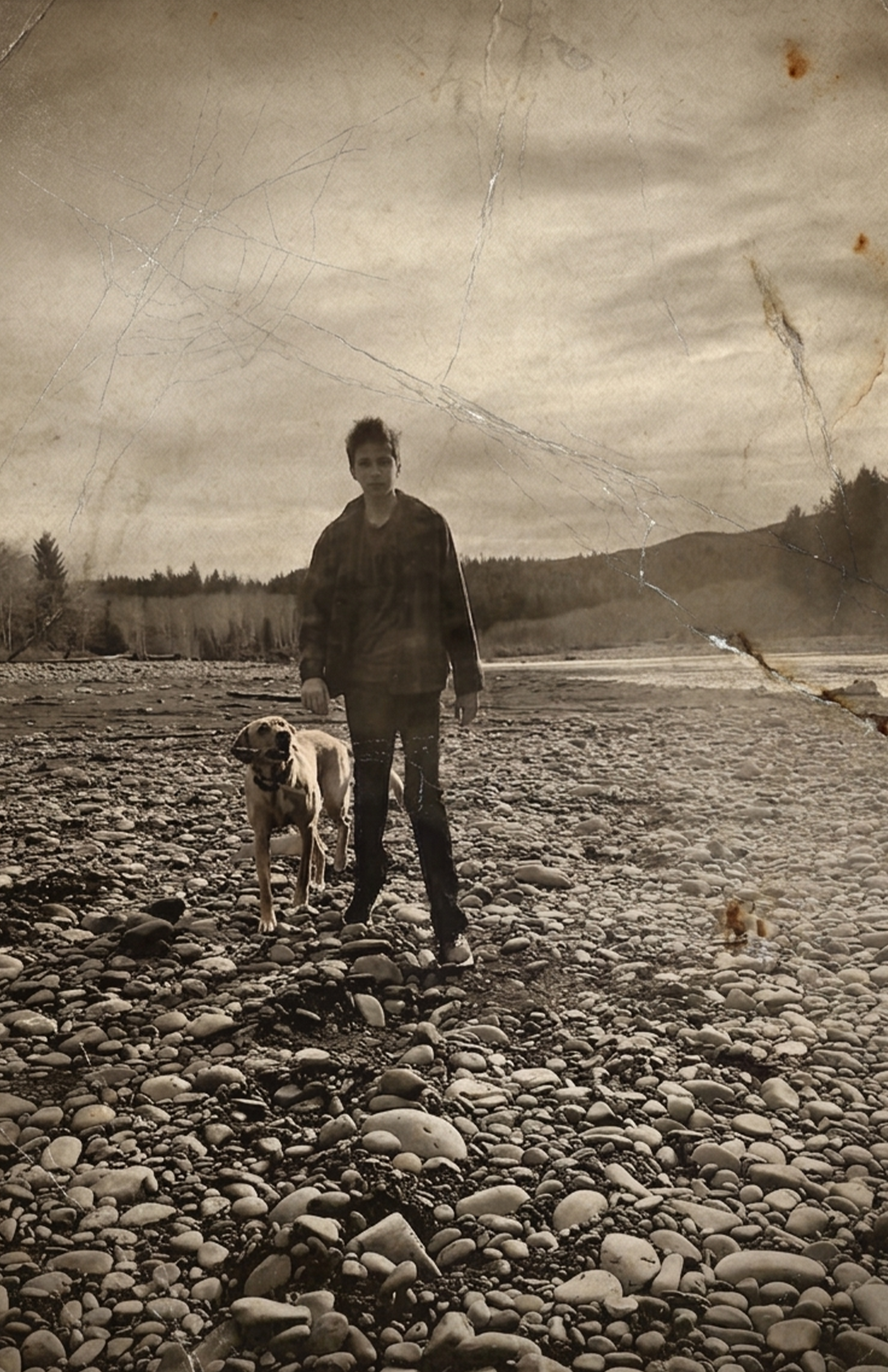
34. The deep canopy is a vertical Eden filled with mosses, lichens, spotted salamanders, hanging gardens of ferns, and thickets of huckleberry bushes, all growing out of massive trunk systems that have fused and formed flying buttresses, sometimes carved into blackened chambers hollowed out by fire. Thick layers of soil sitting on limbs harbor animal and plant life unknown to science.
35. My grandpa's dog and I always run across the rocks playing with sticks until night, right before sitting around a bonfire. These moments matter to me because it gives me peace and makes me feel as one with nature, giving hope and inspiration for nature inspired music.
36. No one trod easily upon the emotions of another where the sea licked everywhere against an endless shoreline.
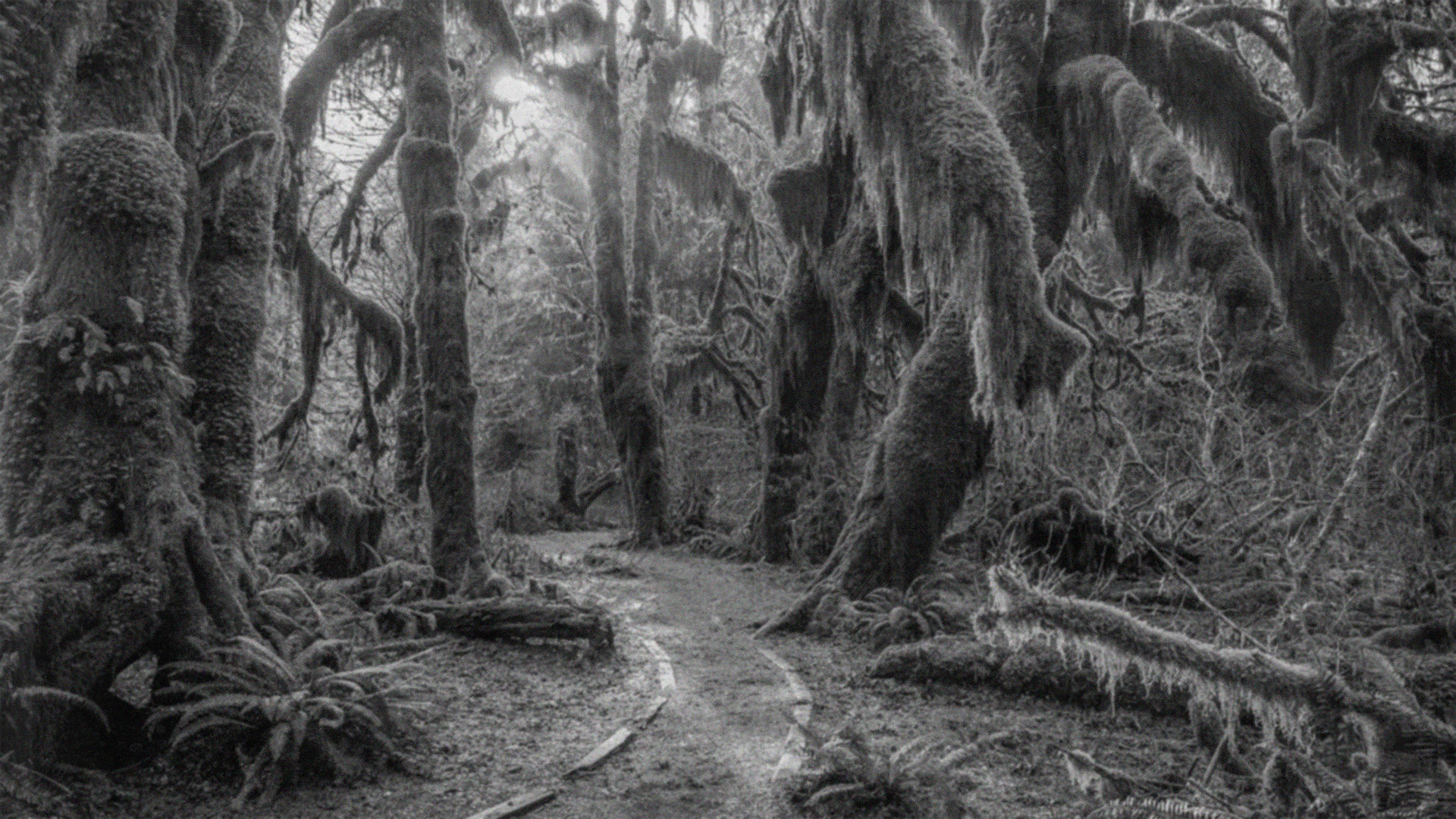
37. The Hoh receives more than 140 inches of rain per year. Moss colonizes everything — boulders, fallen logs, the lower branches of the living trees — so that the forest floor looks less like a place than a condition.
38. The Hall of Mosses trail is 0.8 miles long. This is its only flaw.
39. The bigleaf maples along the Hall of Mosses grow their moss on the outside, which means the whole tree is the color of the forest floor, which means the whole forest floor is the color of the whole tree, which means you are standing inside a single continuous green thing and the boundary between ground and sky is a question the forest has decided not to answer.
40. Hoh. From the Quileute word for snow water. The river carries glacier melt from Mount Olympus 56 miles to the ocean. It is cold enough that you feel it in your back teeth when you wade it. The whole forest drinks it.
41. The Hoh River Trail runs flat for 13 miles through old growth before it begins to climb. Thirteen miles of this — the hanging moss, the nurse logs exhaling new trees, the Roosevelt elk standing in the gravel bars like they've been placed there by someone who wanted you to understand something. Then the trail turns and rises 4,300 feet to Glacier Meadows, the basecamp for climbing Mount Olympus. Rain forest to glacier in a single trail. The park contains multitudes.
42. There are 140 species of moss in the Hoh Rain Forest. One hundred and forty species of the same green thing, each doing something slightly different with water and light and time.
43. In the Hall of Mosses the light is not light exactly. It is what light becomes after it has passed through 200 feet of canopy and emerged the color of the inside of a leaf. You could read by it. You could also just stand in it and let it make you feel that you have arrived somewhere that has been waiting.
44. The trees along the Hall of Mosses stand like green-robed figures of eld, patient and enormous, holding the sky up with their arms.
45. By not letting places be themselves we show our contempt for them. We bury them in sentiment, then suffocate them to death in one way or another. Children are usually better at finding mushrooms and arrowheads because they are either ignorant of or unwilling to carry the load.
46. Angela stopped walking and didn’t say a word. She raised the camera and then lowered it again. Some things you don't photograph because you know the photograph doesn’t do justice to the real thing.
47. The Spruce Nature Trail follows the Hoh River and opens onto the gravel bars where the elk come to stand in the evening. It is 1.2 miles. The Hall of Mosses is 0.8 miles. Between them they contain more of what a forest is than most forests contain in their entirety.
48. I want to live near here someday.
49. Where fishers once caught 100-pound Chinook salmon, adults now rarely grow to twenty pounds. Overall, the salmon population declined from a pre-dam estimate of 400,000 to perhaps 3,000 today.
50. The forest canopies of the earth are realms of unfathomed nature, and they are vanishing.
51. Whatever she found out about it would be almost nothing in comparison to what remained unknown about the tall temperate rain forests of the Pacific Northwest.
52. I tried to make music that felt associated with this particular place in some way, whether it's literally described in words or just an ambiguous feeling.
53. Raymond Carver lived the last decade of his life in Port Angeles, on the north shore of the Olympic Peninsula. He is buried at Ocean View Cemetery there. The inscription on his gravestone:
Late Fragment
And did you get what
you wanted from this life, even so?
I did.
And what did you want?
To call myself beloved, to feel myself
beloved on the earth.
54. Tess Gallagher was born and raised in Port Angeles. She brought Carver here in 1978. She has lived here most of her life, working in the rain and the mountain light and the harbor fog, and it is all in her poems.
55. Poets talk about "spots of time," but it is really the fishermen who experience eternity compressed into a moment. No one can tell what a spot of time is until suddenly the whole world is a fish and the fish is gone.
56. Standing thigh deep in a river with the water passing at the exact but varying speed of life. You easily recognize this mortality and it dissipates into the landscape.
57. I went to the woods because I wished to live deliberately, to front only the essential facts of life, and see if I could not learn what it had to teach, and not, when I came to die, discover that I had not lived.
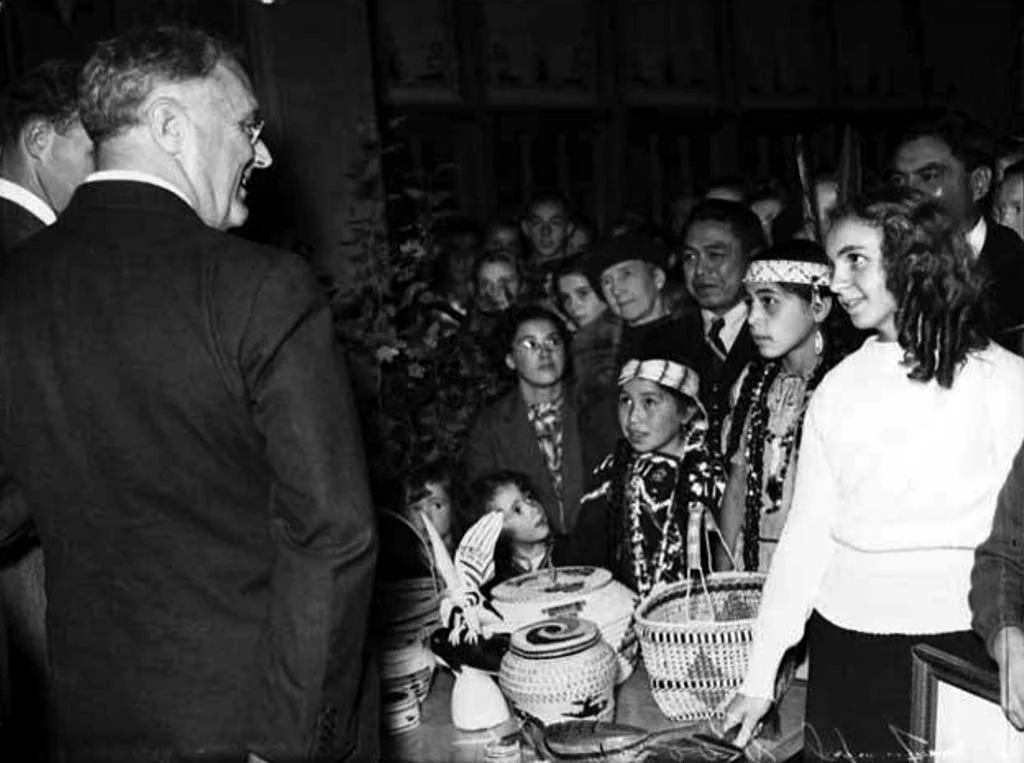
58. All human claims to the landscape were superseded, made null and void by the snow. The world was one world, and the notion that a man might kill another over some small patch of it did not make sense.
59. The steelhead run from the ocean into the river to spawn, navigating thousands of miles by smell, returning to the exact tributary where they were born. Nobody fully understands how they do it.
60. What I wanted more than anything was to simply walk and witness.
61. Preserving natural silence is as necessary and essential as species preservation, habitat restoration, toxic waste cleanup, and carbon dioxide reduction. A single law would signal a huge and immediate improvement. That law would prohibit all aircraft from flying over our most pristine national parks.
62. An archaeologist has documented cultural sites at the former Elwha Dam site dating to 8,000 years old — some of the oldest known in the Pacific Northwest. These are the Lower Elwha Klallam's creation sites.
63. Eventually, all things merge into one, and a river runs through it. The river was cut by the world's great flood and runs over rocks from the basement of time. On some of those rocks are timeless raindrops. Under the rocks are the words, and some of the words are theirs. I am haunted by waters.
64. The timber proposed for the park, said Regional Forester C.J. Buck, would mean year-long employment for 600 men in the woods and 600 more family men working in five mills with 120 thousand board feet per day cut, 200 days a year. A total community of 1,200 families from now until Gabriel blows his horn.
65. Gabriel has not yet blown his horn. The Hoh Rain Forest still stands.
66. The Forest Service staged FDR's entire 1937 visit. They moved a boundary sign so a clear-cut would appear to be on private land. They excluded the Park Service from the guest list. They scheduled a logging train to pass the window during the president's breakfast.
67. FDR looked at the logged-out hillside his guides had arranged for him to see. He didn't know he was looking at a national forest. He didn't know the man beside him had arranged it all. He said: I hope the son of a bitch who's responsible for this is roasting in hell.
68. In September of 1937, FDR visited the Olympic Peninsula. He toured burned-over stump land miles in extent and became even more committed to a generous national park. That evening at Lake Crescent Lodge he told a gathering of congressmen and Forest Service officials: you are not allowing a large enough national park. I am thinking 50 years ahead.
69. Nine months later he signed the bill.
70. We abuse land because we regard it as a commodity belonging to us. When we see land as a community to which we belong, we may begin to use it with love and respect.
71. Music is just a part of who we are as people in this area. So music has had this huge impact on me, as a spiritual being and as a human being in this world.
72. By 1900, the tribes owned less than 2 percent of the land they once possessed. Entire languages had already disappeared — more than a loss of words, a loss of a way to look at the world.
73. The Forest Service has punched 343,000 miles of logging roads into the vast stands of public trees — more than seven times the 44,000 miles of road built by the national highway system.
74. My roots are strong and deep.
75. I cannot remember things I once read. A few friends, but they are in cities. Drinking cold snow-water from a tin cup, looking down for miles through high still air.
76. The larger question for the Northwest, where the cities are barely a hundred years old but contain three-fourths of the population, is whether the wild land can provide work for those who need it as their source of income without being ruined for those who need it as their source of sanity.
77. Olympic is one of three distinct ecosystems inside a single boundary — rain forest valleys, alpine peaks, and 73 miles of wild coastline. Three parks in one, as Hempton says, any one of which would justify its entire existence.
78. At a certain point, you say to the woods, to the sea, to the mountains, the world: Now I am ready. Now I will stop and be wholly attentive. You empty yourself and wait, listening.
79. The removal of the Elwha Dam and Glines Canyon Dam — completed in 2014 — was the largest dam removal project in the history of the world. The river had been blocked for 103 years. Within months of removal, salmon were spotted above the old dam site for the first time in a century.
80. We sat on the bank and the river went by. As always, it was making sounds to itself, and now it made sounds to us. It would be hard to find three men sitting side by side who knew better what a river was saying.
81. The Olympic marmot is found nowhere else on earth. Its call — a high, two-toned whistle — echoes off the rock faces of Hurricane Ridge and carries for half a mile in clear weather. Gordon Hempton has recorded it.
82. Nature is not a place you visit. It is home.
83. In a 2014 interview, Phil Elverum discussed how his choice of moniker coming from a mountain in Anacortes was a way of infusing a sense of regional connection between the music and the place.
84. Katherine Paul grew up on the Swinomish Reservation minutes from the Olympic Peninsula. In the fall of 2020 she drove back from Portland, back to the cedar trees shrouded in fog, back to the tide flats and the mountains, back to Swinomish. Back to the land.
85. The land, the water, the sky. Those are all interconnected.
86. A river or stream is a cycle of energy from sun to plants to insects to fish. It is a continuum broken only by humans.
87. One cubic foot of tidepool can support more than four thousand living things.
88. My favorite church of all is what I call the cathedral of the Hoh Rain Forest, at Olympic National Park. It has the world's tallest trees, over 300 feet high, and it's there that the least amount of noise pollution intrudes of anywhere else in the United States.
89. The oldest task in human history: to live on a piece of land without spoiling it.
90. In 1853, Theodore Winthrop hired S'Klallam paddlers and their canoe at Port Townsend and made his way down Puget Sound — through the same waters that border Olympic's northern coast — becoming one of the first Americans to write about this region at length. He died in the Civil War in 1861. His book was published posthumously in 1863 and became a bestseller. It was the first time most Americans encountered the word Klallam. It was the first time they encountered this coast.
91. And studying the light and the majesty there passed from it and entered into my being, to dwell there evermore by the side of many such, a thought and an image of solemn beauty, which I could thenceforth evoke whenever in the world I must have peace or die.
92. Silence is a sound, many, many sounds. I've heard more than I can count. Silence is the moonlit song of the coyote signing the air, and the answer of its mate.
93. The largest Sitka spruce in the world grows near Lake Quinault. It is believed to be over 1,000 years old. The Quinault Indian Nation has managed this forest for ten thousand years.
94. There is this legend: in 1853, Winthrop's Klallam paddlers threw his rum into the Puget Sound. He pulled his pistol. They resumed paddling. He came to love them anyway. He wrote about them for nine years and never published a word. Then he died in the first months of the war, at age thirty-two, and the words came out without him.
95. Ask the quiet how you can help. And the quiet will answer you.
96. Phil Elverum says: almost all of the ideas are directly lifted from zen poetry. Cold Mountain, Eihei Dōgen, Gary Snyder. The distinction between wild and not wild is an illusion.
97. We are here to witness the creation and to abet it. We are here to notice each thing so each thing gets noticed. Together we notice not only each mountain shadow and each stone on the beach but, especially, we notice the beautiful faces and complex natures of each other. Otherwise, creation would be playing to an empty house.
98. The Quileute and the Hoh are river peoples. Their cosmology begins with water. The salmon is not a resource. It is a relative.
99. Time is but the stream I go a-fishing in. I drink at it; but while I drink I see the sandy bottom and detect how shallow it is. Its thin current slides away, but eternity remains.
100. One of the penalties of an ecological education is that one lives alone in a world of wounds.
101. The park was created. The fight did not end. In 1942, timber executive William B. Greeley — former head of the Forest Service — went to the War Production Board and argued for logging the park's Sitka spruce for airplane construction. He said: Nothing is too sacred to do its share.
102. The political pressure dissipated in 1943 when it became clear that airplane-grade lumber could be readily obtained from other sources. The Hoh was not logged. This was not inevitable. It was luck, and timing, and the specific chemistry of one war.
103. In 1952 the Park Service director authorized the park superintendent to undertake salvage logging within the park's own boundaries. Nobody outside the park knew. By the time a seasonal ranger noticed and told anyone, more than 100 million board feet had been stripped from inside Olympic National Park.
104. The Mountaineers stopped it. Two members brought what they'd seen to the club's conservation committee. The logging stopped. The 100 million board feet did not grow back.
105. The man who was a fire lookout in the Cascades brought the poet to the mountains. The poet brought the novelist. The novelist turned off the radio in order to write. The ranger who remembered him complained about it for thirty years.
106. If our father had had his way, nobody who did not know how to catch a fish would be allowed to disgrace a fish by catching him.
107. The land runs through Katherine Paul's blood. And it called to her. In dreams she saw the river, her ancestors, and her home. When the land calls, you listen.
108. The world's largest known living organism by volume is a grove of quaking aspen in Utah. The world's most massive organism by biomass — if you count the fungal network connecting individual trees through their root systems — may be right here, under the Hoh Rain Forest floor, operating in complete silence.
109. The morning wind forever blows, the poem of creation is uninterrupted.
110. The park is everything the music is trying to reach.
111. What I want from the record is the feeling of walking into the forest and having it be vast and unknowable, but you're still there. You're still yourself, inside it.
112. In September 2019, the Makah Tribal Council voted to resume whaling. They are the only tribe in the contiguous United States with treaty rights to hunt whales, rights secured in 1855 — rights they gave up voluntarily for 70 years and then reclaimed. The whale is not a symbol. The whale is the whale.
113. During climbs into the tallest trees, I was occasionally able to look down on the backs of birds, which shine with reflected sunlight as they move through the green depths of the canopy, like schools of fish.
114. The lower Elwha Klallam people have a word for the river in their language. After the dams came down and the salmon returned, some elders stood on the bank and wept. The word for the river is also the word for themselves.
115. Once there were brook trout in the streams in the mountains. You could see them standing in the amber current where the white edges of their fins wimpled softly in the flow. They smelled of moss in your hand. Polished and muscular and torsional. On their backs were vermiculate patterns that were maps of the world in its becoming. Of a thing which could not be put back. Not be made right again. In the deep glens where they lived all things were older than man and they hummed of mystery.
116. In Olympic National Park, the loss of two permanent staff members from the fisheries team leaves 4,000 miles of river without dedicated management expertise. The Elwha and Glines Canyon Dams were removed in 2014. The salmon came back. The people watching over their return have been let go.
117. On February 14, 2025, the Trump administration fired more than 1,000 National Park Service employees in a single day. Olympic National Park lost five. The date was Valentine's Day. Fired workers called it a massacre.
118. In March 2025, President Trump signed an executive order directing the rewriting and sanitization of American history and science at national parks. Exhibits about Indigenous history, slavery, climate change, and women's contributions began coming down from park sites across the country. Interpretive materials explaining the mistreatment of Indigenous peoples were flagged for removal. Rangers now hesitate before answering certain questions. The hesitation is the policy working as intended.
119. The plan is to get rid of public lands altogether, turning them over to the states, which can be coerced as the federal government cannot be, and eventually to private ownership. This is your land we are talking about.
120. Bernard DeVoto wrote those words in Harper's in January 1947. He called it the landgrab. His articles stopped it. He wrote later, in 1955: this is not going to succeed even now, with a President in the White House who is ignorant of the situation and piously indifferent to it, the landgrabbers in control of the Department of the Interior.
121. It is the forever-recurrent lust to liquidate the West.
122. We simply need that wild country available to us, even if we never do more than drive to its edge and look in. For it can be a means of reassuring ourselves of our sanity as creatures, a part of the geography of hope.
123. Much of the content of my music and other art is tied to the place.
124. My warm blood.
125. Flying over Vancouver Island today — a ferry ride from here, the same latitude, the same rainfall, the same species of tree — you see the moth-eaten landscape of what the Olympic Peninsula would have become. Clear-cut squares and rectangles, fragmented patchwork, the ancient forest reduced to geometry. The park is an island of what the whole peninsula would have been.
126. Harold Ickes wrote in his diary after visiting: It is truly a wonderland of nature, and it is more than I can understand how people who pretend to be interested in conservation could be opposed to its creation into a national park. Then he gave a speech in Seattle. Someone asked what should be done with Olympic. He said: the solution can be stated in four words. Keep it a wilderness.
127. The oldest forests in Olympic have stood since before Shakespeare was born. A Douglas-fir that fell here in the twelfth century is still decomposing, still feeding the forest floor with its slow return. A nurse log. The seedlings of the next forest grow from it in a colonnade.
128. The old-growth Douglas-fir that was standing in the Hoh valley when C.J. Buck made his argument is still standing. It was approximately 400 years old then. It is approximately 490 years old now. It has never heard of C.J. Buck.
129. In Potawatomi, and in many other Native languages, a river is not referred to as "it." It is referred to as who. The grammar of animacy. The Hoh River is who, not it. This changes everything you thought you understood about the word "conservation."
130. What happens when music is made about a place over and over, by people who belong to it? It becomes, eventually, something like a prayer.
131. Olympic National Park. 922,650 acres. Established 1938. Fifty years of thinking ahead turned into eighty-seven years of a thing that exists.
132. Jude is fifteen. He has been coming here since he was five. He says he wants to live near here someday. He said it quietly and without looking up.
133. The vibrant sound of the river. The dog on the rocks. The bonfire. The thing you cannot name that a place does to you when it gets inside.
This writing contains quotations that go unacknowledged in the body of the text. Your uncertainty about whose words you’ve just read is not a bug but a feature. However, our lawyer determined that it was necessary for us to provide a complete list of citations; the list can be found here. (except, of course, for any sources we couldn’t find or forgot along the way).
If you would like to restore this writing to the form in which we intended it to be read, do not click on the link.